The Pivotal Role of Shale Shaker Screen Manufacturers in Modern Drilling Operations
In the intricate world of oil and gas exploration and production, efficient solids control is paramount. At the heart of this efficiency are shale shakers, and their effectiveness hinges critically on the quality and performance of their screens. As such, the selection of reliable shale shaker screen manufacturers is not merely a purchasing decision but a strategic one that directly impacts drilling efficiency, environmental compliance, and operational costs. These manufacturers specialize in engineering screens that meet the rigorous demands of various drilling fluids and geological formations, ensuring optimal separation of solids from valuable drilling mud.
The continuous advancement in drilling technologies, particularly in unconventional plays like shale gas, has spurred innovations in solids control equipment. Modern shale shaker screens are designed for higher conductance, longer service life, and improved separation efficiency, reducing waste volume and maximizing mud recovery. This article delves into the critical aspects of selecting and understanding the products offered by leading shale shaker screen manufacturers, covering everything from manufacturing processes and technical specifications to application scenarios and vendor comparisons, providing a comprehensive guide for industry professionals.
Manufacturing Process of High-Performance Shale Shaker Screens
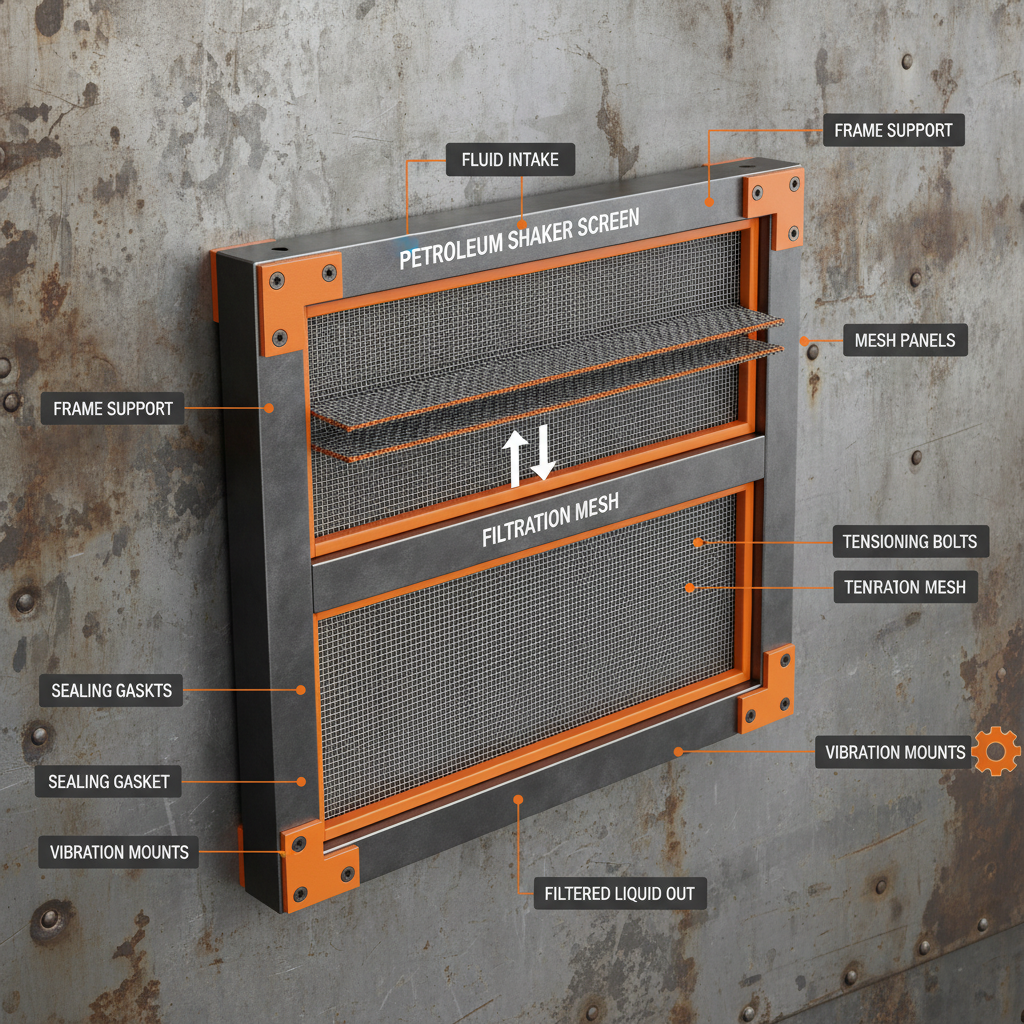
The creation of a high-quality shale shaker screen is a sophisticated process demanding precision engineering, advanced materials, and stringent quality control. Shale shaker screen manufacturers adhere to meticulous steps to produce screens capable of withstanding harsh drilling environments. The process typically encompasses material selection, frame construction, mesh fabrication, screen assembly, and rigorous testing.
Key Stages in Screen Production:
- Material Selection: The foundation of screen performance lies in the choice of materials. High-grade stainless steel wire cloth (typically SS304 or SS316 for enhanced corrosion resistance) is selected for the mesh. The frame material often involves high-strength steel or composite materials, chosen for their durability and resistance to deformation under vibration. For specialized applications, unique polymer blends might be used in composite frames to reduce weight and improve chemical resistance.
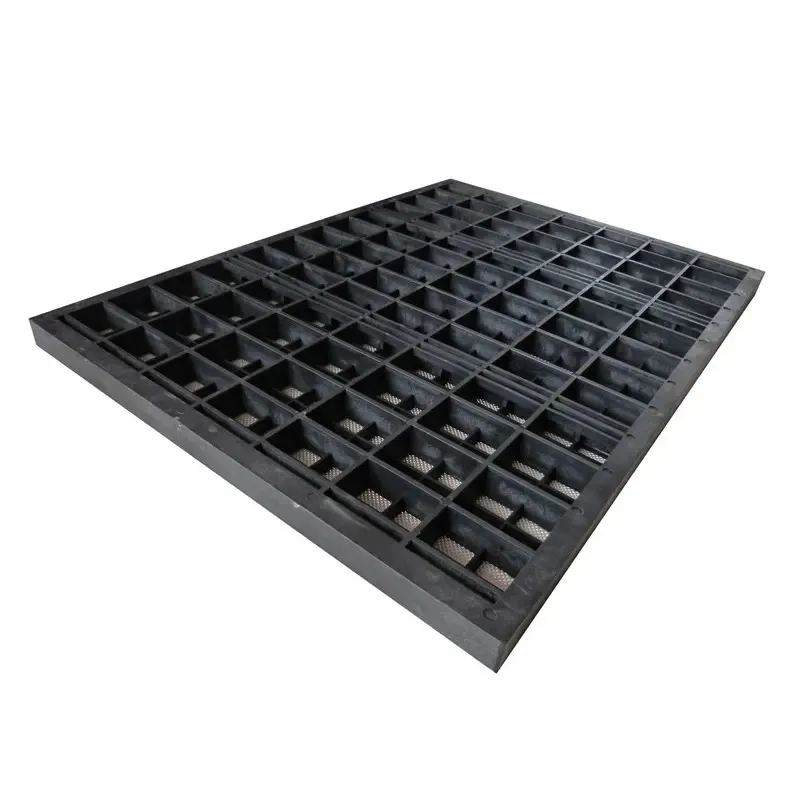
- Frame Fabrication: For steel-framed screens, the process often involves precise CNC machining of steel profiles, followed by welding and heat treatment to achieve structural integrity and stress relief. Composite frames, increasingly popular, are typically manufactured through injection molding or compression molding processes, integrating specialized polymers with reinforcement materials to create a robust yet lightweight structure.
- Mesh Weaving and Cutting: The stainless steel wire is woven into precise mesh patterns. Modern screens often feature multi-layered designs, combining different mesh sizes for optimized separation efficiency and service life. The woven mesh is then precisely cut to size, often using laser cutting or automated shearing machines to ensure accuracy and prevent fraying.
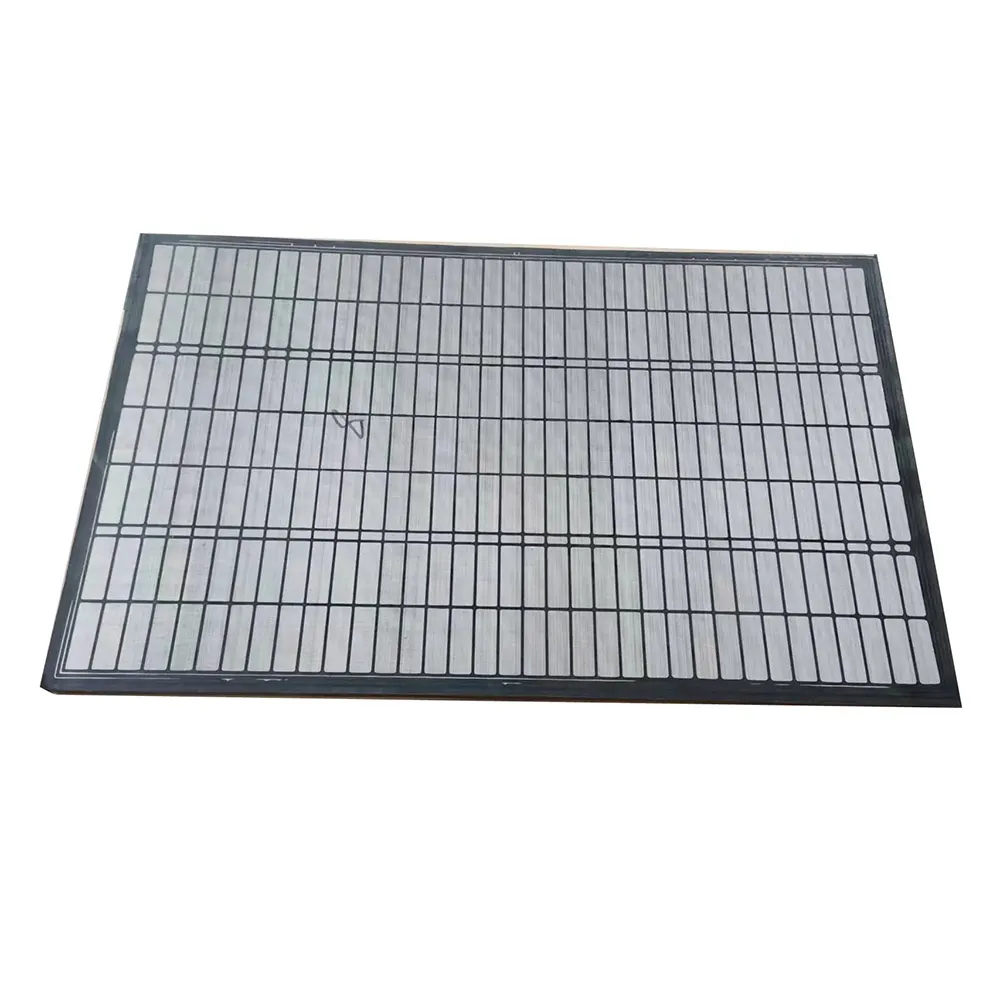
- Screen Assembly and Bonding: The prepared mesh layers are meticulously stretched over the frame. Advanced bonding techniques, such as vacuum bonding or hot melt adhesion, are used to securely attach the mesh to the frame, ensuring uniform tension across the screen surface. This prevents sagging or premature tearing, critical for consistent performance. For `brandt shaker screens` and other premium brands, this bonding is key to their structural integrity.
- Finishing and Quality Control: After assembly, screens undergo various finishing processes, including edge sealing and surface treatment, to enhance durability and prevent corrosion. Each screen is then subjected to stringent testing standards, often adhering to ISO 9001 quality management systems and API RP 13C (Recommended Practice for Shaker Screen Terminology and Evaluation). These tests include visual inspection, dimensional checks, mesh size verification, and tension testing to guarantee performance parameters such as conductance and non-blanked area.
The target industries for these screens include petrochemical, mining, metallurgy, water supply & drainage, and environmental engineering. In typical application scenarios, such as managing drilling mud on an offshore rig, the screens demonstrate advantages like energy saving (due to reduced mud loss and regrinding requirements), enhanced corrosion resistance from specialized coatings, and extended service life, which translates directly into lower operational expenditure for drilling contractors.
Industry Trends and Innovations in Shale Shaker Screens
The solids control industry is continually evolving, driven by the need for greater efficiency, reduced environmental impact, and lower operational costs. Current trends observed by leading shale shaker screen manufacturers include a strong focus on finer separation capabilities, enhanced screen longevity, and smart screen technologies.
- API RP 13C Compliance and Optimization: The industry standard for evaluating shaker screens, API RP 13C, continues to guide product development. Manufacturers are pushing the boundaries to achieve higher conductance and larger non-blanked areas for a given D-cut point, optimizing drilling fluid recovery without sacrificing solids removal efficiency.
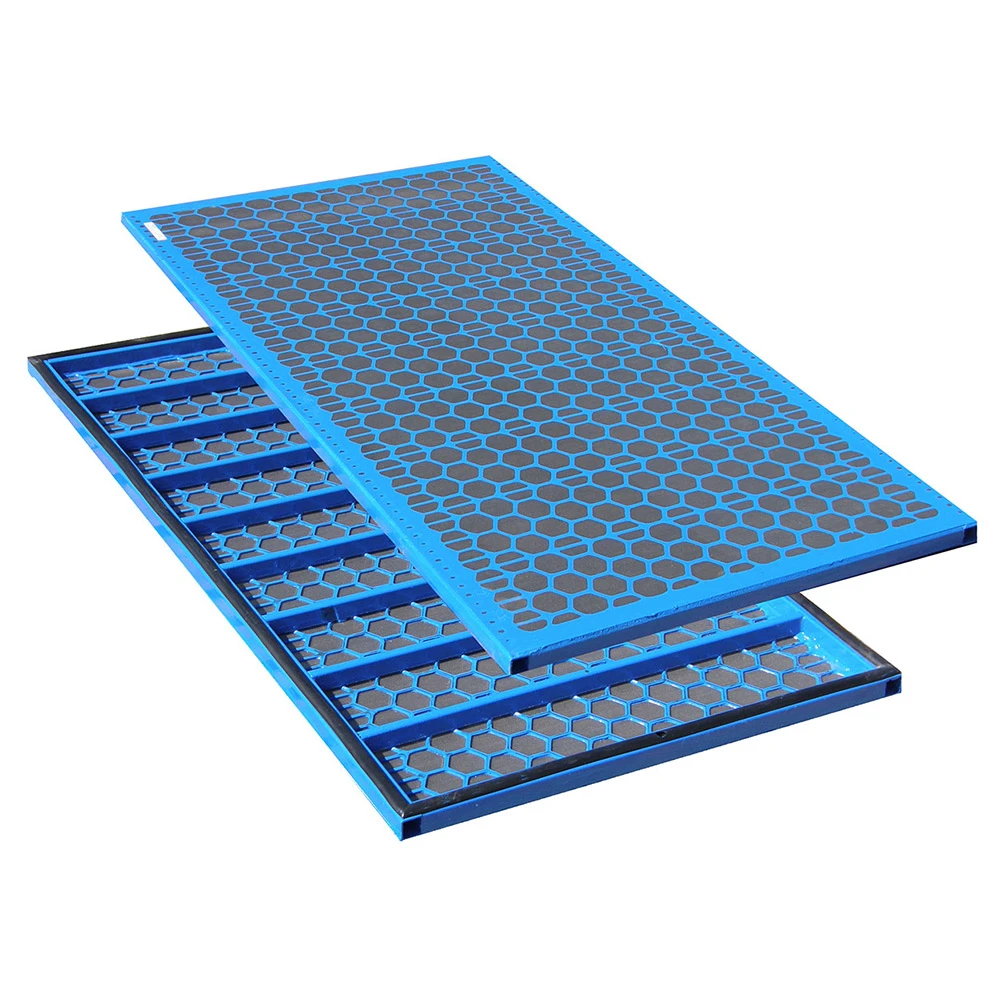
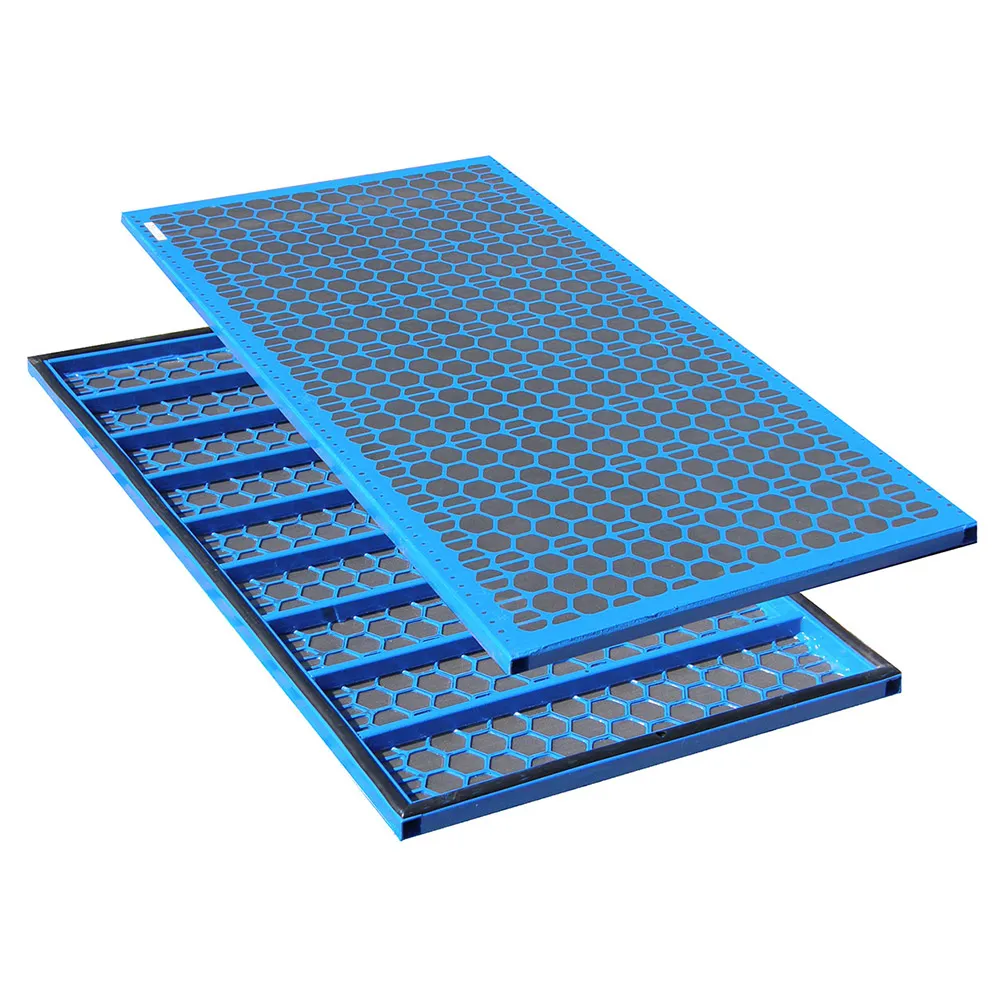
- Composite Frame Technology: Moving away from traditional steel frames, composite frames offer significant advantages. They are lighter, resistant to corrosion, and often provide a longer service life due to better vibration damping characteristics. This reduces screen replacement frequency and lowers shipping costs. Many `brandt shaker screens` are transitioning to advanced composite solutions.
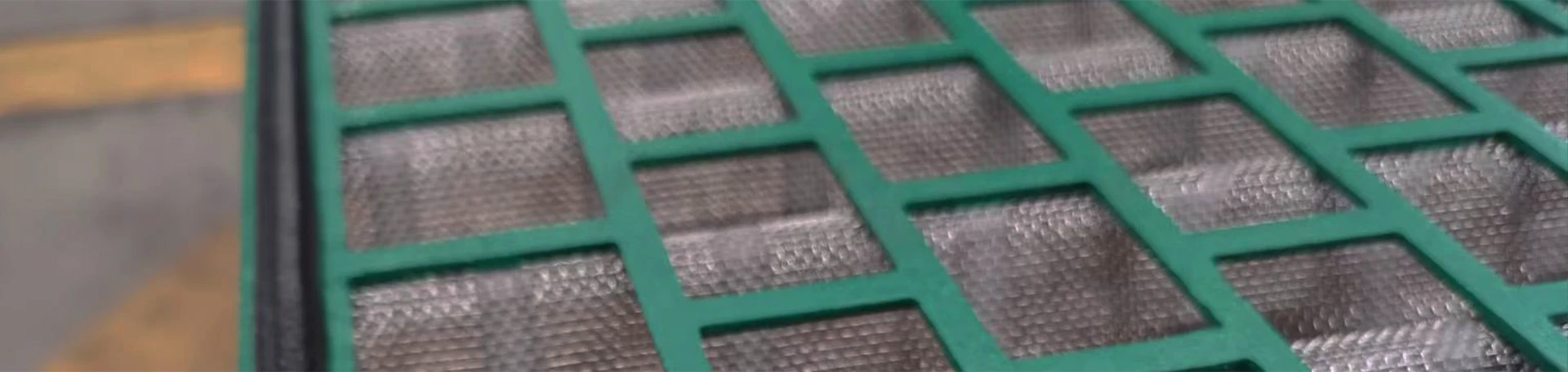
- Multi-Layered Screen Designs: Advanced screen designs incorporate multiple layers of mesh with varying apertures, carefully arranged to improve throughput and extend life. This includes designs like the pyramidal or corrugated screen surfaces, which increase the effective screening area, enhancing separation efficiency for systems like the `vsm 300 shaker`.
- Smart Screens and IoT Integration: The advent of IoT is influencing solids control. Future screens may incorporate embedded sensors to monitor wear, vibration patterns, and blinding, providing real-time data to operators for predictive maintenance and optimized screen usage.
- Sustainability and Waste Reduction: With increasing environmental regulations, there's a growing demand for screens that facilitate more efficient waste management. This includes screens designed to produce drier cuttings, reducing the volume of waste material that needs to be transported and disposed of.
These trends underscore the commitment of shale shaker screen manufacturers to continuous innovation, addressing the evolving needs of the global drilling industry and promoting more sustainable and cost-effective operations.
Technical Specifications and Performance Parameters
Understanding the technical specifications of shale shaker screens is crucial for optimizing drilling performance. Reputable shale shaker screen manufacturers provide detailed data to help operators select the most appropriate screen for their specific drilling conditions. Key parameters, often defined by API RP 13C, include:
- API Mesh Number: A standard for classifying screens based on their sieve analysis properties.
- D-Cut Point (Microns): The theoretical cut point where 50% of particles of a given size are retained by the screen.
- Non-Blanked Area (NBA) %: The percentage of the screen surface that is open for fluid flow, directly impacting throughput. Higher NBA generally means higher capacity.
- Conductance (kL/hr/m²): A measure of a screen's capacity to pass fluid, critical for high-volume drilling operations.
- Wire Diameter: Influences screen strength and mesh opening.
- Material: Typically SS304 or SS316, with frame material being steel or composite.
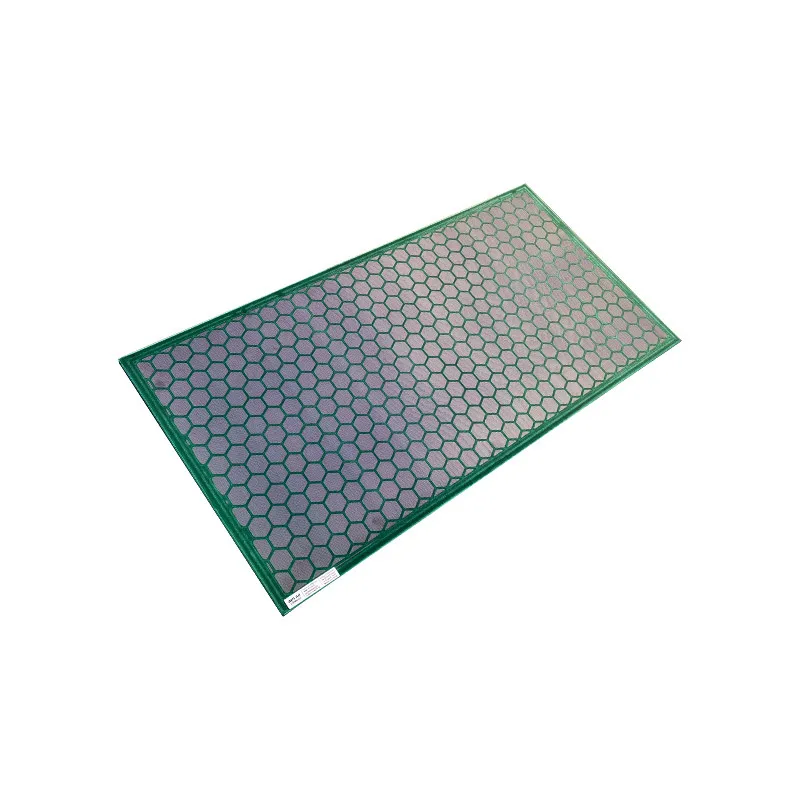
Typical Brandt Replacement Shale Shaker Screen Specifications
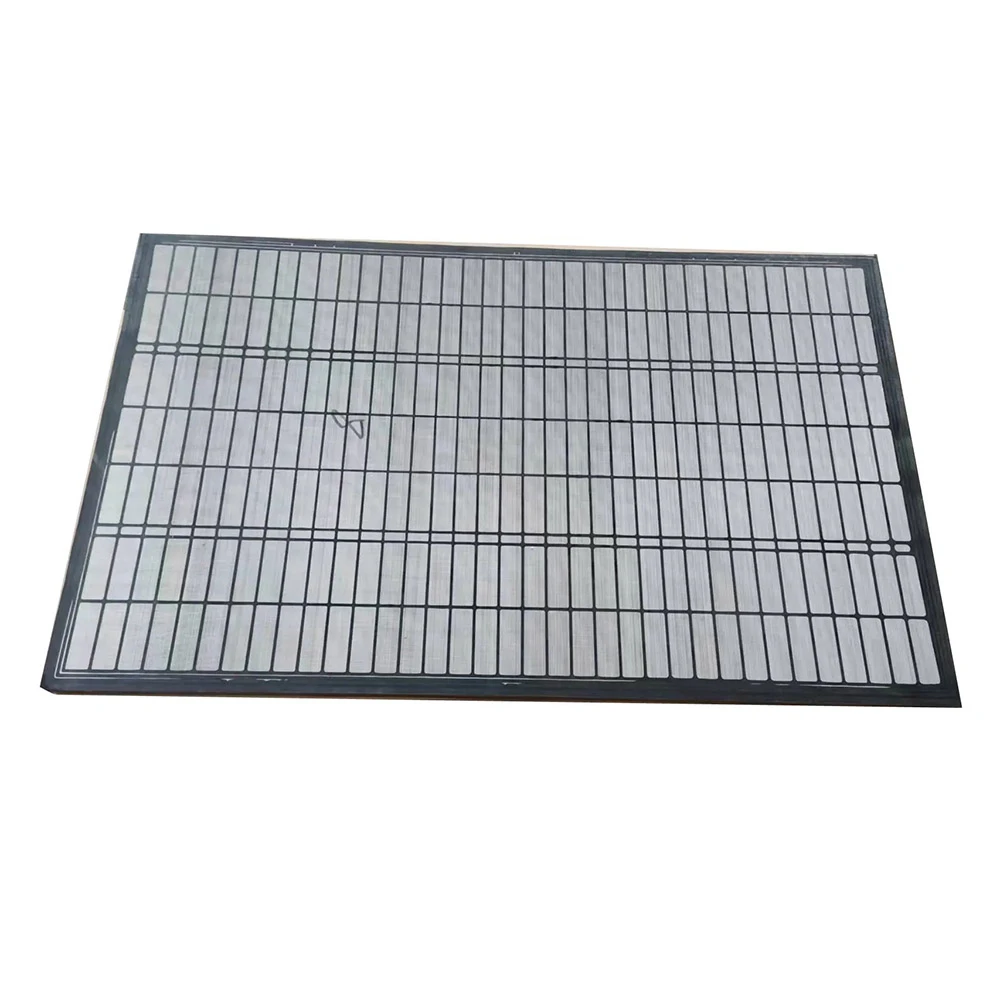
Below is a sample product specification table for a Brandt Replacement Shale Shaker Screen, illustrating the kind of detail provided by top shale shaker screen manufacturers. This specific type is often sought after when looking for a `shaker screen for sale` due to its widespread compatibility and proven performance, including for shakers like the `king cobra shale shaker` and `vsm 300 shaker`.
| Parameter | Value/Description |
|---|---|
| Product Name | Brandt Replacement Shale Shaker Screen |
| Screen Type | Pyramidal/Corrugated (Hookstrip or Frame Panel) |
| Material | High-strength Steel Frame / Composite Frame; SS304/SS316 Mesh |
| API Mesh Sizes Available | API 60, API 80, API 100, API 120, API 140, API 170, API 200, API 230, API 270, API 325, API 400 |
| D-Cut Point (typical range) | 240 µm (API 60) to 38 µm (API 400) |
| Non-Blanked Area (NBA) | Typically 70% - 85% depending on mesh size |
| Conductance (typical) | Up to 240 kL/hr/m² (for coarser screens) |
| Compatibility | Compatible with various Brandt shaker models (e.g., King Cobra, VSM 300, FLCS series, BEM-600) |
| Operating Temperature | -20°C to +100°C (-4°F to +212°F) |
| Life Expectancy | Extended service life due to optimized design and materials (variable based on drilling conditions) |
Application Scenarios and Technical Advantages
Shale shaker screens are indispensable across a multitude of drilling applications, from conventional vertical wells to complex horizontal and directional drilling. The diverse offerings from shale shaker screen manufacturers ensure that there is a suitable screen for every phase of drilling and every type of drilling fluid.
Typical Application Scenarios:
- Oil and Gas Drilling: The primary application, covering both onshore and offshore operations. Screens are crucial for separating drill cuttings from water-based muds (WBM), oil-based muds (OBM), and synthetic-based muds (SBM). The high-performance `brandt shaker screens` are frequently deployed on sophisticated systems like the `king cobra shale shaker` and `vsm 300 shaker` to manage high fluid volumes and varied solids content.
- Horizontal Directional Drilling (HDD): Increasingly used in trenchless construction for pipelines, cables, and utilities. HDD operations demand robust solids control to manage often abrasive and high-volume cuttings.
- Mining and Minerals Processing: While not the primary focus, similar separation principles apply in mineral beneficiation processes where slurries need to be dewatered or classified.
- Industrial Waste Management: Screens can be adapted for municipal and industrial wastewater treatment, separating solids from liquid streams.
Technical Advantages:
- Optimized Fluid Recovery: Advanced screen designs maximize the recovery of expensive drilling fluids, significantly reducing mud costs and the need for frequent replenishment. This directly impacts the economic viability of a drilling project.
- Enhanced Solids Removal: Superior screening efficiency means cleaner drilling fluid circulates downhole, minimizing wear on drilling bits and pumps, and improving overall drilling penetration rates. This also contributes to wellbore stability.
- Extended Service Life: High-quality materials and robust construction lead to screens that endure longer in abrasive and corrosive environments. This reduces downtime for screen changes and lowers replacement costs, making them an excellent `shaker screen for sale` investment.
- Reduced Environmental Impact: By producing drier cuttings, the volume of waste requiring disposal is minimized, leading to more environmentally responsible operations and compliance with strict regulations.
- Improved Safety: Less frequent screen changes reduce personnel exposure to moving machinery and hazardous drilling fluids, enhancing site safety.
Vendor Comparison and Customized Solutions
Choosing the right shale shaker screen manufacturers involves more than just looking at the price tag. It requires a thorough evaluation of various factors, including product quality, technical support, customization capabilities, and after-sales service. While many suppliers offer a `shaker screen for sale`, discerning clients look for comprehensive partnerships.
Key Factors for Vendor Comparison:
| Factor | Leading Manufacturers (e.g., Brandt replacement suppliers) | Generic Suppliers |
|---|---|---|
| Product Quality & Adherence to Standards | Strict API RP 13C compliance, ISO certified, premium SS316/composite materials, consistent D-cut points & conductance. | Variable quality, potentially non-compliant with API standards, cheaper materials (SS304), inconsistent performance. |
| Technical Expertise & R&D | Dedicated R&D, offer advanced designs (e.g., corrugated, multi-layer), continuous innovation for systems like `king cobra shale shaker` and `vsm 300 shaker`. | Limited R&D, often produce standard, basic screen designs without optimization for new drilling challenges. |
| Customization & Compatibility | Ability to provide tailored mesh sizes, frame types (e.g., specialized `brandt shaker screens`), and material combinations for specific drilling conditions. Broad compatibility with various OEM shakers. | Standard off-the-shelf products, limited or no customization, potential compatibility issues with specific shaker models. |
| Service Life & Durability | Extended service life due to robust design and premium bonding, minimizing downtime and replacement frequency. | Shorter service life, prone to premature tearing or blinding, leading to higher operational costs. |
| Technical Support & After-Sales | Comprehensive technical support, field service, troubleshooting, and performance guarantees. | Limited or no technical support, minimal post-purchase assistance. |
| Lead Time & Fulfillment | Efficient supply chains, ability to manage large orders, and consistent delivery schedules. | Potentially unreliable lead times, difficulty handling urgent or large-scale requirements. |
Customized Solutions:
Leading shale shaker screen manufacturers recognize that a one-size-fits-all approach is insufficient for the diverse challenges encountered in drilling. They offer customized solutions tailored to specific drilling programs, geological formations, and mud systems. This can include:
- Application-Specific Mesh Sizes: Adjusting API mesh sizes to optimize drilling fluid parameters for specific formations (e.g., fine mesh for top-hole sections, coarser for production zones).
- Specialized Frame Materials: Utilizing composite frames for lightweight or corrosion-resistant requirements, especially in offshore or highly corrosive environments.
- Enhanced Durability Features: Incorporating wear plates, reinforced edges, or special coatings for highly abrasive drilling conditions to extend screen life.
- Optimized Panel Designs: Developing screen panels that integrate seamlessly with specific shaker models, such as the `king cobra shale shaker` or `vsm 300 shaker`, to maximize their operational efficiency.
Such customization ensures that clients receive the most effective and economical screen solutions, maximizing their operational uptime and minimizing costs. When evaluating a `shaker screen for sale`, the capacity for customization is a significant differentiator.
Application Case Studies: Real-World Impact
The practical benefits of high-quality shale shaker screens are best illustrated through real-world applications. These case studies highlight how optimized solids control, driven by reliable shale shaker screen manufacturers, translates into significant operational improvements and cost savings.
Case Study 1: Enhanced Drilling in an Unconventional Shale Play
An independent E&P company operating in the Permian Basin faced challenges with drilling fluid losses and excessive waste volume due to premature screen blinding and low throughput from their existing `brandt shaker screens` (older models). They transitioned to an advanced composite-framed screen from a specialized `shale shaker screen manufacturers` designed to optimize performance on their `king cobra shale shaker` units. The new screens featured a multi-layered design with improved non-blanked area and conductance.
- Result: A 15% reduction in drilling fluid consumption, a 20% decrease in waste cuttings volume (due to drier solids), and a 25% increase in screen service life. This led to an estimated savings of $120,000 per well over a 6-month drilling program, primarily from reduced mud costs and waste disposal fees.
Case Study 2: Offshore Deepwater Efficiency Improvement
A major international drilling contractor deployed on a deepwater project in the Gulf of Mexico encountered difficulties maintaining mud properties during a high-rate drilling section, leading to frequent wellbore stability issues. Their `vsm 300 shaker` units were fitted with standard screens. Collaborating with their shale shaker screen manufacturers, they implemented custom-designed, higher API mesh screens specifically engineered for the challenging deepwater conditions and the properties of their synthetic-based drilling fluid. These screens were designed for higher conductance to handle the increased flow rates without sacrificing fine solids removal.
- Result: The tailored screens significantly improved solids removal efficiency, allowing the drilling team to maintain optimal mud weight and rheology. This resulted in a 10% increase in drilling speed (ROP) and a substantial reduction in non-productive time (NPT) related to mud issues, totaling an estimated $500,000 in operational savings for the duration of the drilling campaign.
Case Study 3: Addressing Abrasive Formations in Mining Exploration
In a mineral exploration project, drilling through highly abrasive formations caused rapid wear and tear on conventional screens, leading to constant replacements and operational delays. A specialized `shale shaker screen for sale` was identified from a manufacturer known for their robust designs. These `brandt shaker screens` replacements featured a strengthened wire cloth, a unique bonding process for enhanced mesh integrity, and an abrasion-resistant composite frame, specifically designed for heavy-duty applications.
- Result: The new screens demonstrated a 50% increase in service life compared to previous screens, drastically reducing replacement costs and maintenance downtime. The improved durability ensured consistent solids control, contributing to a smoother, more efficient drilling program and preventing costly project overruns.
Ensuring Trustworthiness: FAQ, Lead Time, Warranty, and Support
Building trust with B2B clients requires transparency and robust support infrastructure. Leading shale shaker screen manufacturers prioritize these aspects, offering clear information on product reliability, logistics, and post-purchase assistance.
Frequently Asked Questions (FAQ):
- Q: What is API RP 13C, and why is it important?
- A: API RP 13C is the American Petroleum Institute's Recommended Practice for Shaker Screen Terminology and Evaluation. It provides a standardized method for classifying and comparing shaker screens based on cut point, conductance, and non-blanked area, ensuring consistent performance measurement across all shale shaker screen manufacturers.
- Q: How do I select the correct mesh size for my drilling operation?
- A: Screen selection depends on several factors: the geological formation (size of drilled solids), drilling fluid properties (viscosity, density), pump flow rate, and desired cut point. Consult with our technical experts to receive a customized recommendation for your specific conditions, whether for a `vsm 300 shaker` or a `king cobra shale shaker`.
- Q: What are the advantages of composite frames over traditional steel frames?
- A: Composite frames are generally lighter, more corrosion-resistant, and offer better vibration damping, leading to extended screen life and reduced risk of delamination. They can also be more resistant to blinding and easier to handle on the rig.
- Q: Can you provide replacement screens for specific OEM shakers, such as `brandt shaker screens`?
- A: Yes, many leading shale shaker screen manufacturers specialize in high-quality replacement screens fully compatible with various OEM shaker models, including Brandt, NOV, Derrick, MI-Swaco, and others, often offering superior performance and durability compared to standard OEM offerings. Always verify compatibility.
Lead Time & Fulfillment Details:
We maintain a robust inventory of common screen types and sizes to ensure rapid dispatch for urgent needs. For specialized or large-volume orders, standard lead times range from 2 to 4 weeks, depending on customization requirements and material availability. Expedited shipping options are available upon request. Our global logistics network ensures timely delivery to operations worldwide, minimizing downtime for our clients actively seeking a `shaker screen for sale`.
Warranty Commitments:
All our shale shaker screens come with a standard 12-month warranty against manufacturing defects and material failures under normal operating conditions. This warranty reflects our confidence in the quality and durability of our products, manufactured by experienced shale shaker screen manufacturers. We are committed to standing by the performance of our screens.
Customer Support & Technical Assistance:
Our dedicated technical support team is available 24/7 to provide assistance with screen selection, installation guidance, troubleshooting, and performance optimization. We offer on-site field support and remote consultations to ensure our clients achieve maximum efficiency from their solids control equipment. Our goal is to forge lasting partnerships by providing unparalleled support throughout the product lifecycle.
Conclusion
The selection of the right shale shaker screen is a critical factor in the success of any drilling operation. By understanding the intricate manufacturing processes, adhering to rigorous technical specifications, and leveraging advanced materials, leading shale shaker screen manufacturers deliver products that significantly enhance drilling efficiency, reduce environmental impact, and lower operational costs. Partnering with a reputable manufacturer that offers robust technical support, customized solutions, and a strong commitment to quality and service ensures that drilling contractors and E&P companies can navigate the complexities of solids control with confidence, ultimately contributing to safer, more efficient, and more sustainable drilling practices across the globe.
References
- API Recommended Practice 13C: Recommended Practice for Shaker Screen Terminology and Evaluation, 5th Edition. American Petroleum Institute.
- Solid-Liquid Separation: Principles of Screen Design and Application in Drilling Operations. Journal of Petroleum Technology.
- Innovations in Composite Materials for Enhanced Drilling Fluid Solids Control. Offshore Technology Conference Proceedings.
- Economic Impact of High-Performance Shale Shaker Screens on Unconventional Resource Development. SPE Drilling & Completion Journal.
- Environmental Considerations and Waste Management in Modern Drilling: The Role of Solids Control. Environmental Science & Technology.