Operational expenses in drilling often fluctuate based on the longevity and cost of consumable parts, with shaker screens being among the most frequently replaced components. When procurement teams search for a cheap shale screen, the primary challenge is distinguishing between a low-cost product that compromises filtration efficiency and a value-engineered solution that maintains performance.
The tension between budget constraints and the need for high-performance solids control is a constant in the oil and gas sector. Substandard screens can lead to increased fluid loss, downstream equipment wear, and costly non-productive time (NPT), effectively erasing any initial savings gained from a lower purchase price.
Understanding the structural integrity and material composition of replacement screens allows operators to optimize their spend without risking wellbore stability. This article examines the technical benchmarks of value-driven screening solutions and how to evaluate them for long-term operational success.


The pursuit of a cheap shale screen has evolved from seeking the lowest price per unit to seeking the lowest cost per hour of operation. Value engineering in the manufacturing of replacement screens focuses on removing unnecessary overhead while maintaining the critical mechanical properties required to withstand high G-forces and abrasive drilling mud.
Hebei Matts Tech Co., Ltd. applies this logic by utilizing high-strength square steel tubes and flat steel in multi-ribbed constructions. By optimizing the welding process and bonding techniques, it is possible to produce screens that match the performance of premium brands like NOV or SWACO without the brand-name price premium.
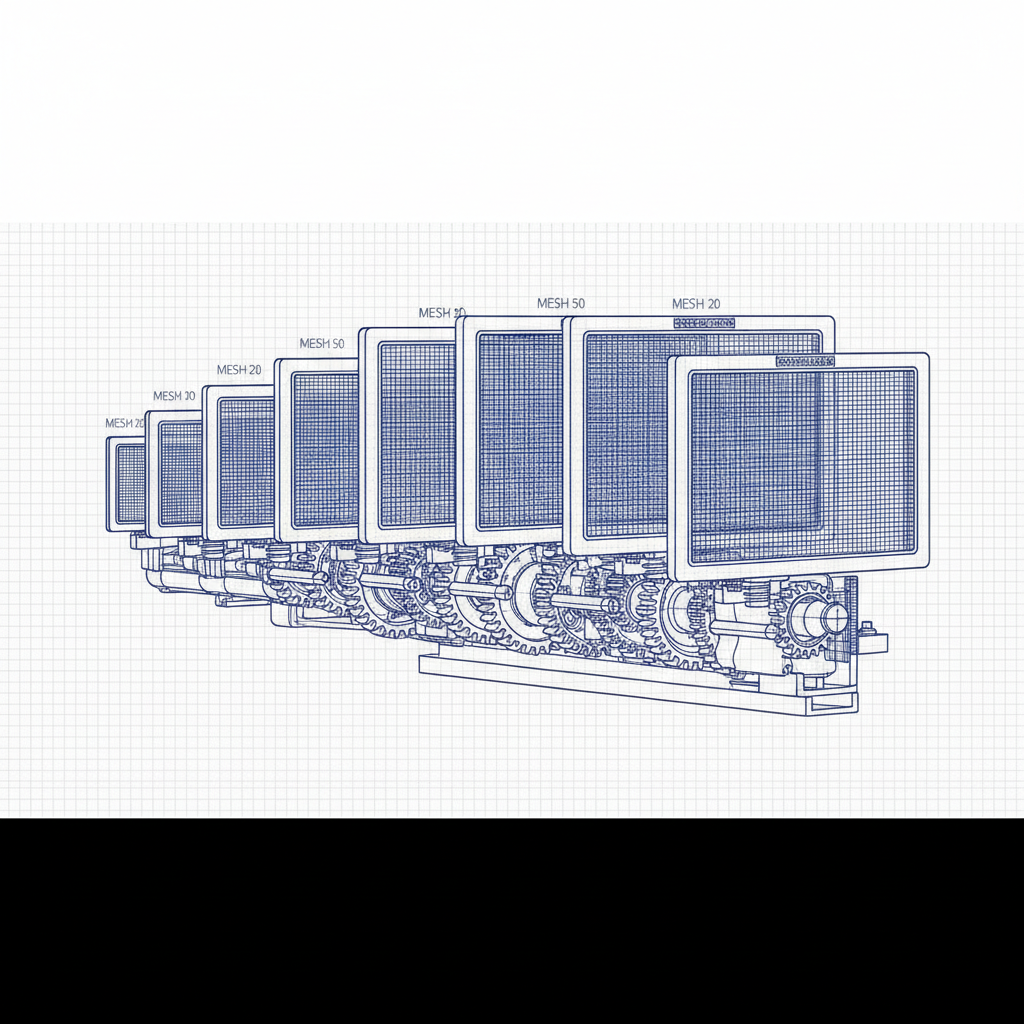
Modern steel frame screens are characterized by their composite construction. They typically consist of two or three layers of stainless steel mesh, which are tightly bonded to a rigid steel frame. This multi-layer approach ensures that if the top layer suffers from localized wear, the subsequent layers maintain the integrity of the filtration process, preventing oversized solids from contaminating the mud system.
The frame itself is the backbone of the screen, constructed from high-strength square steel tubing or flat steel. The use of a multi-ribbed construction is essential to prevent the screen from sagging or warping under the weight of the fluid and the intensity of the shaker's vibration. This rigidity is what allows the screen to maintain a consistent aperture size across its entire surface area.
Coupling methods also vary; the mesh layers are either secured through metal backing plates or bonded directly to the frame. These methods are designed to eliminate gaps where mud could seep through, ensuring that all fluid passes through the filtration media and that the bond does not fail under the high-frequency oscillation typical of onshore and offshore drilling environments.
Evaluating the "cheapness" of a shaker screen requires a Total Cost of Ownership (TCO) analysis. A screen that costs 30% less initially but lasts only 50% as long as a standard replacement increases the frequency of screen changes, thereby increasing labor costs and potential downtime.
True value in solids control is achieved when the rate of wear on the stainless steel mesh is balanced against the replacement interval, ensuring that the screen is replaced just before failure, not long after.
To achieve this balance, operators often look for replacement screens that utilize certified 304 or 316 stainless steel. These materials provide the necessary corrosion resistance to handle chemically aggressive drilling fluids while offering the tensile strength needed to resist the abrasive action of sand and shale cuttings.
Measuring the efficiency of a replacement screen involves assessing the "Cut Point"—the size of the smallest particle that is consistently removed from the fluid. A high-quality replacement screen must maintain a consistent cut point across its entire surface, regardless of the pressure exerted by the mud flow.
When comparing different tiers of screens, the relative performance can be mapped across several indices: structural rigidity, flow rate capacity, wear resistance, and fit precision. These factors determine whether a screen will operate seamlessly within existing shaker frames or cause vibration issues due to poor tolerances.
Selecting the right replacement screen depends heavily on the geological formation being drilled. In high-sand environments, the focus shifts toward extreme abrasion resistance, where a thicker stainless steel wire diameter is preferred even if it slightly reduces the open area. Conversely, in clay-heavy formations, the priority is preventing "blinding" or clogging of the mesh, requiring optimized aperture shapes and surface finishes.
For operators using NOV or SWACO equipment, ensuring that the replacement screen fits the original manufacturer's (OEM) dimensions is non-negotiable. Any gap in the fit can lead to "bypass," where unfiltered mud flows around the screen, drastically reducing the efficiency of the entire solids control system and increasing the burden on downstream centrifuges.
The transition from basic wire cloth to engineered multi-layer screens reflects the industry's demand for higher fluid recovery. By utilizing bonded layers, manufacturers can create a "graduated" filtration effect where larger particles are caught by the top layer and finer particles are trapped by the bottom layers, reducing the risk of sudden screen failure.
Innovation is also appearing in the bonding agents used to secure the mesh to the steel frame. Advanced adhesives and mechanical backing plates now allow screens to operate at higher G-forces without the mesh peeling away from the frame, which was a common failure point in early low-cost replacements.
Looking forward, the integration of lean manufacturing—such as that employed at the 15,000 sqm facility of Hebei Matts Tech Co., Ltd.—allows for the rapid production of custom specifications. This flexibility enables operators to adjust their screen mesh size in real-time based on the changes in cuttings size encountered during the drilling process.
When sourcing replacement screens, procurement officers should evaluate suppliers based on a combination of material certification, manufacturing capacity, and delivery lead times. A supplier that can deliver a high-specification screen within 7-15 working days provides significantly more value than a cheaper option with an uncertain delivery window.
The trade-off between a "cheap" screen and a "premium" screen often comes down to the precision of the frame's ribs and the quality of the weld. Poorly welded frames can develop stress cracks under continuous vibration, leading to catastrophic failure of the screen and potential damage to the shaker deck.
The following evaluation matrix provides a conceptual framework for comparing different screening options based on typical operational requirements.
| Evaluation Factor | Entry-Level Screen | Value-Engineered | Premium OEM |
|---|---|---|---|
| Material Grade | Standard Steel | 304/316 Stainless | High-Grade Alloy |
| Frame Construction | Single Rib | Multi-Ribbed | Reinforced Casting |
| Bonding Method | Basic Adhesive | Backing Plate/Bonded | Integrated Weld |
| Lifespan Index | Low | Moderate-High | High |
| Fit Precision | Variable | High (Toleranced) | Exact |
| TCO Efficiency | Poor | Optimal | Moderate |
A value screen is defined by its ability to maintain OEM-level performance—such as cut-point accuracy and structural rigidity—while reducing costs through efficient manufacturing and direct supply chains. In contrast, low-quality screens often use inferior steel grades, lack multi-ribbed frame reinforcement, and have poor bonding between the mesh and the frame, leading to premature failure and increased mud loss.
The frame must withstand intense G-forces and the weight of the mud. A multi-ribbed construction using high-strength square or flat steel prevents the screen from bowing. If a frame warps, the mesh stretches, changing the aperture size and allowing oversized solids to pass through. High-quality frames ensure the mesh remains under consistent tension, which significantly extends the wear life of the stainless steel layers.
While the general concept of a shale screen is the same, the physical dimensions, locking mechanisms, and frame profiles are brand-specific. Replacement screens for Brandt, NOV, and SWACO shakers are engineered to meet the specific footprints of those machines. Using a screen that is not precision-engineered for the specific model can cause "bypass," where mud leaks around the edges, rendering the filtration process ineffective.
The most common causes are abrasion from high-sand content, chemical corrosion from drilling additives, and mechanical fatigue of the frame. Mesh "blinding" or clogging also occurs when the screen size is too fine for the cuttings. Using a screen with the correct stainless steel grade (304 or 316) and a reinforced frame can mitigate these risks, provided the screen mesh size is correctly matched to the formation.
Multi-layer construction (typically two or three layers) acts as a redundancy system. The top layer handles the bulk of the abrasive impact, while the underlying layers provide the final filtration. If the primary layer fails, the lower layers prevent a total breakdown of solids control. This design also increases the overall structural strength of the screening surface, allowing it to handle higher flow rates without sagging.
In drilling, NPT (Non-Productive Time) is far more expensive than the cost of a screen. A reliable supplier should have a strategic inventory of popular models for immediate shipment and a streamlined logistics network. A delivery window of 7-15 working days is generally considered efficient for global shipping, ensuring that replacement screens arrive before the current set reaches its failure point.
Finding a cheap shale screen does not have to mean compromising on the integrity of your solids control system. By focusing on technical specifications—such as the use of 304/316 stainless steel, multi-ribbed frame construction, and precise fit tolerances—operators can significantly reduce their consumable costs while maintaining optimal fluid recovery.
The shift toward value-engineered replacement screens allows for greater operational flexibility and lower TCO. As drilling environments become more challenging, the reliance on precision-engineered, durable filtration solutions will only increase, making the selection of a technically competent manufacturing partner a strategic operational advantage.