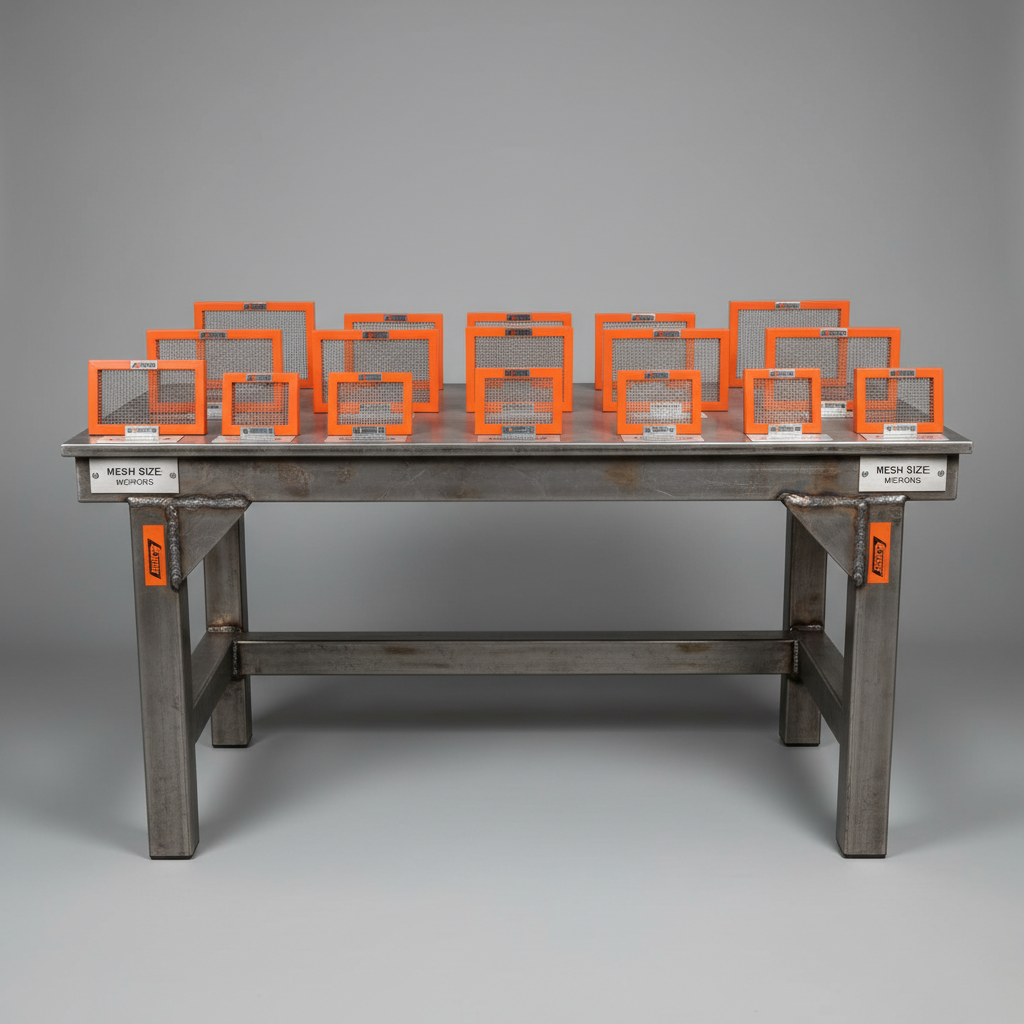
Maintaining optimal drilling fluid quality depends heavily on the precision of solids control equipment, where the screen serves as the primary barrier against unwanted contaminants. In high-pressure drilling environments, the failure or inefficiency of a shaker screen can lead to immediate production bottlenecks and increased operational costs.
The industry has shifted from standard flat-mesh designs toward high-performance replacements that prioritize larger effective areas and higher throughput. This transition is driven by the need to handle higher flow rates without sacrificing the quality of fluid recovery or increasing the risk of screen blinding.
Selecting a reliable shaker screen manufacturer requires an understanding of the trade-offs between mesh size, material durability, and the specific geometry of the screen. The following analysis explores the technical evolution of these components and how to optimize selection for onshore and offshore drilling.


Historically, shale shaker screens utilized simple flat wire mesh. While effective for basic filtration, these designs often suffered from rapid "blinding," where fine particles plug the openings, drastically reducing the fluid's flow capacity.
Modern manufacturing has introduced wave-type and PMD (Pyramid Mesh Design) structures. By introducing three-dimensional geometry into the screen, manufacturers have successfully increased the available open area, allowing for higher throughput without requiring a larger machine footprint.
When evaluating replacement screens for brands like NOV, SWACO, or Brandt, the focus must extend beyond mere compatibility. The integrity of the screen depends on the quality of the stainless steel (typically 304 or 316) and the precision of the weld. Any inconsistency in the mesh size can lead to "over-sized" particles entering the mud system, which can cause premature wear on downstream centrifugal pumps.
The tensioning of the screen is another critical factor. A screen that is not perfectly tensioned will vibrate inconsistently, leading to localized fatigue and premature failure. High-performance replacements are engineered to maintain structural tension even under the extreme G-forces produced by linear or elliptical motion shakers.
Mesh size selection is a balancing act between fluid recovery and solids removal. While a finer mesh (e.g., 325 mesh) provides superior fluid clarity, it increases the risk of fluid loss over the end of the shaker. Conversely, a coarser mesh (e.g., 20 mesh) handles high volumes but allows more solids to remain in the drilling fluid.
The transition from flat screens to wave-type designs represents a significant leap in solids control efficiency. Flat screens provide a linear path for the fluid, which often leads to a "boundary layer" of solids that inhibits flow. Wave-type screens break this layer by creating a turbulent flow, which keeps particles moving toward the discharge end.
Wave-type screens, such as replacement Derrick PMD models, can provide an effective filtration area that is 125% to 150% larger than traditional flat screens, allowing for increased production without modifying the shaker's mechanical construction.
This increase in effective area directly translates to a lower pressure drop across the screen. For operators, this means the drilling fluid is processed more efficiently, reducing the "mud-over" risk and improving the overall quality of the returned fluid, which is essential for maintaining wellbore stability.
Efficiency in a solids control system is measured by the ratio of fluid recovered to the volume of solids removed. When comparing different screen technologies, the "effective area" is the most critical metric. A higher effective area allows the fluid to pass through the mesh more easily, reducing the time the fluid spends on the screen.
By analyzing relative performance indices, it becomes clear that three-dimensional mesh structures outperform traditional wire cloth. This is particularly evident when processing viscous muds, where the wave-like geometry prevents the fluid from "pooling" and facilitates faster drainage.
In a typical industrial setting, such as an offshore rig with limited space, the ability to increase production without adding more shaker units is invaluable. This is where the application of high-area replacement screens becomes critical. By swapping standard screens for wave-type alternatives, operators can increase their flow capacity by up to 50%, directly reducing the risk of mud-over during high-ROP (Rate of Penetration) sections.
For a manufacturer evaluating their supply chain, the focus often shifts to the longevity of the screen under abrasive conditions. In formations with high sand content, the wear rate on the mesh is accelerated. Therefore, the selection of a screen must consider the balance between aperture size and wire diameter to ensure that the screen does not fail prematurely while still maintaining the required filtration level.
The industry is currently moving toward "smart" selection, where screen mesh sizes are adjusted in real-time based on the solids analysis of the drilling fluid. This requires a supply chain capable of providing a wide range of mesh sizes, typically ranging from 20 to 325, to allow operators to fine-tune their solids control as the well depth increases.
Another emerging trend is the use of advanced composite materials to reduce the weight of the screen frame while increasing its rigidity. While stainless steel remains the standard for the mesh itself, the frames are being optimized to reduce the load on the shaker's motor, thereby extending the lifespan of the entire mechanical system.
Furthermore, there is an increasing demand for customized replacement screens that can fit non-standard or legacy shaker models. This requires a manufacturer to have deep technical archives and the ability to engineer custom solutions that meet the original equipment manufacturer (OEM) specifications while offering improved performance characteristics.
Procuring replacement screens is not merely a matter of matching part numbers. A professional procurement framework should evaluate the screen based on its operating environment, the specific characteristics of the drilling mud, and the expected lifespan of the component.
Trade-offs are inevitable; for instance, increasing the mesh fineness always increases the likelihood of blinding. The goal is to find the "sweet spot" where the solids removal is sufficient to protect the pump, but the flow rate is high enough to avoid overflows.
Hebei Matts Tech Co., Ltd. addresses these needs by focusing on precision-engineered replacements for SWACO and NOV systems, ensuring that every batch of screens meets ISO-certified quality controls to withstand the harshest onshore and offshore conditions.
| Condition | Recommended Mesh | Geometry Type | Primary Goal |
|---|---|---|---|
| High Sand Content | Coarse (20-80) | High-Tension Flat | Durability/Wear Resistance |
| Fine Solids Control | Fine (140-325) | Wave-Type/PMD | Fluid Purity |
| High Flow Rates | Medium (80-140) | Wave-Type | Maximize Throughput |
| Viscous Muds | Medium (100-200) | PMD Design | Reduce Blinding |
| Deepwater Drilling | Variable | Custom Hybrid | Reliability/Zero-Failure |
| General Purpose | Medium (80-170) | Standard Wave | Balanced Performance |
Flat screens provide a two-dimensional surface for filtration, which can lead to faster blinding and lower throughput. Wave-type screens introduce a three-dimensional geometry that increases the effective filtration area (often by 125% to 150%) and creates turbulence in the fluid flow. This turbulence prevents solids from settling on the mesh, allowing for higher flow rates and better fluid recovery without needing to change the shaker's physical structure.
Mesh selection depends on the size of the solids you need to remove and the viscosity of your drilling fluid. Coarser meshes (20-80) are used for removing large cuttings and are more durable. Finer meshes (140-325) are used for high-precision solids control. The general rule is to use the finest mesh possible that still allows the fluid to pass through without overflowing the shaker, as this ensures the highest quality of the drilling mud.
Yes, provided the manufacturer uses high-grade materials like 304/316 stainless steel and adheres to strict ISO quality controls. Professional replacement screens for brands like NOV or SWACO are engineered to meet or exceed original specifications. In many cases, replacements using wave-type or PMD technology actually outperform OEM flat screens by offering increased effective area and better resistance to blinding.
The most common causes are abrasive wear from high sand content, improper tensioning, and mechanical fatigue. If a screen is not tensioned correctly, it will experience uneven stress during vibration, leading to cracks in the mesh or frame. Additionally, using a mesh that is too fine for the solids load can cause "blinding," which increases the fluid weight on the screen and accelerates structural failure.
A larger effective area reduces the time required to process a given volume of mud, which increases the overall Rate of Penetration (ROP). By preventing mud-over and improving fluid recovery, operators reduce the amount of expensive drilling fluid lost to the waste pit. This results in lower chemical costs and fewer non-productive time (NPT) events caused by solids control failures.
While standard models are often kept in inventory for immediate shipment, custom orders typically depend on the complexity of the design. Leading manufacturers leverage lean manufacturing principles and streamlined logistics to deliver global orders within 7 to 15 working days. To minimize downtime, it is recommended that operators maintain a strategic inventory of the most commonly used mesh sizes for their specific well profile.
The efficiency of a solids control system is only as strong as its weakest link, which is almost always the shaker screen. By moving toward high-area wave-type geometries and precision-engineered replacements, drilling operators can significantly enhance their fluid recovery and production rates.
Ultimately, the choice of a shaker screen manufacturer should be based on the ability to provide a consistent, high-quality product that balances throughput with durability. Investing in superior screening technology is not just about replacing a part; it is about optimizing the entire drilling process for better stability and lower costs.