High Performance Derrick Shaker Screen Manufacturer Solutions
Efficient solids control is the cornerstone of drilling productivity, where the ability to rapidly remove cuttings while recovering expensive drilling fluids can determine the economic viability of a well. For operators utilizing Brandt equipment, the choice of replacement screens is critical to maintaining optimal separation efficiency. High-performance pretensioned screens are engineered to eliminate the sagging often found in standard mesh, ensuring a consistent aperture size across the entire surface area. By combining a unibody design with proven mesh combinations, these screens provide a robust solution for onshore and offshore environments where downtime is costly.
Integrating API Rp 13C compliant screens ensures that operators receive a standardized product that meets rigorous industry performance metrics. Whether dealing with abrasive sands or sticky clays, the right screen geometry and tension level prevent fluid loss and protect downstream equipment. As a specialized derrick shaker screen manufacturer, Hebei Matts Tech Co., Ltd. focuses on bridging the gap between OEM specifications and field durability, providing replacement solutions that install seamlessly using stock wedges while enhancing overall filtration throughput.

Engineering the Unibody Design for Enhanced Solids Separation
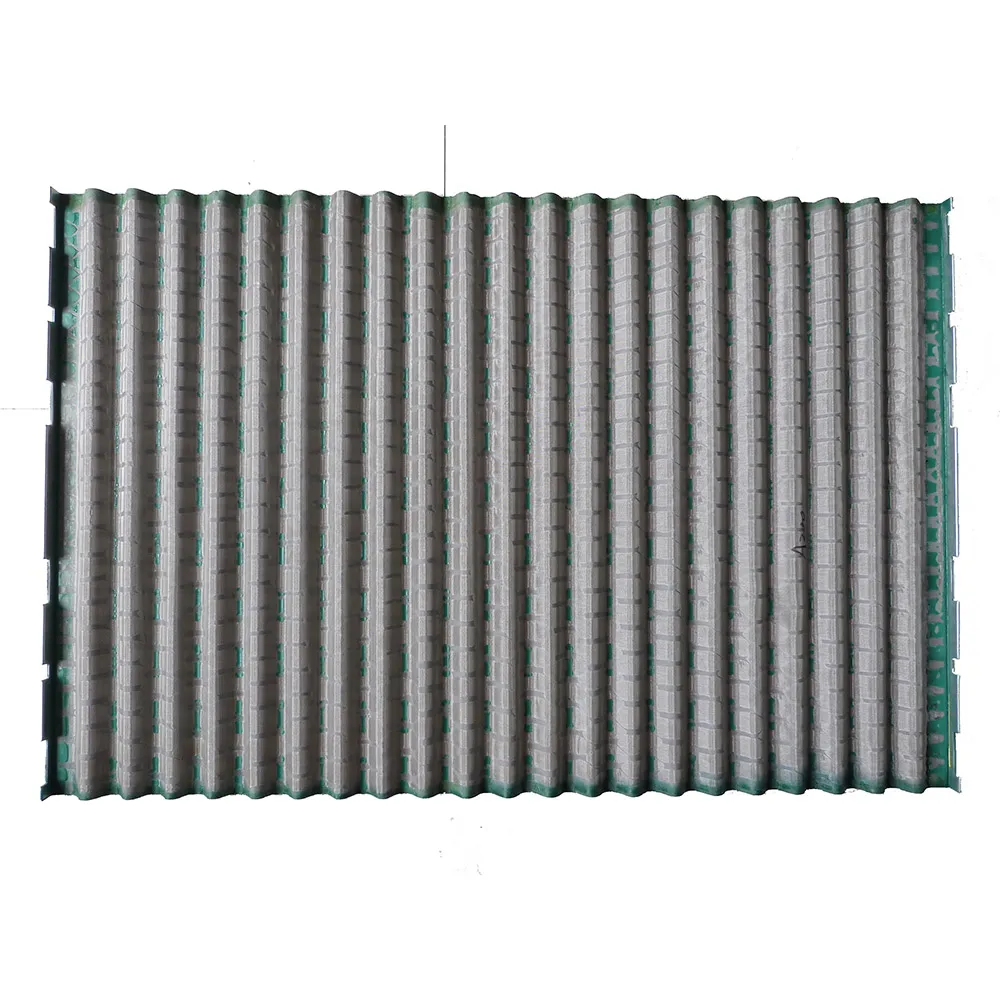
The effectiveness of a shale shaker depends heavily on the stability of the screening medium. Standard screens often experience "belly" or sagging during operation, which reduces the effective G-force applied to the cuttings and allows fluid to bypass the mesh. Our pretensioned replacement screens for Brandt shakers utilize a unibody design, which integrates the frame and the mesh into a single, high-tension unit. This engineering approach ensures that the screen remains flat under extreme vibrational loads, maximizing the available open area for fluid flow.
By maintaining a precise tension, these screens minimize the risk of mesh failure and "blinding," where particles lodge in the openings. The combination of advanced mesh weaving and high-strength materials allows for thinner wires without sacrificing structural integrity. This results in a higher percentage of open area compared to traditional designs, directly translating to increased flow rates and better fluid recovery in demanding drilling conditions.
- Pretensioned Mesh: Eliminates sagging to maintain optimal aperture geometry.
- Unibody Construction: Reduces mechanical weak points and increases fatigue life.
- High-Flow Geometry: Maximizes fluid throughput while retaining smaller solids.
- Direct Compatibility: Engineered for immediate installation with stock wedges.

Compliance with API Rp 13C and Industry Performance Standards
In the oil and gas sector, standardization is the only way to guarantee consistency across different drilling sites. All our pretensioned screens are API Rp 13C compliant, meaning they have undergone rigorous testing for aperture size, break strength, and durability. This compliance gives procurement managers and drilling engineers the confidence that the replacement screen will perform exactly as specified, preventing unexpected fluid losses that could jeopardize the wellbore stability.
The adherence to API standards is not just about a label; it involves a strict manufacturing process. From the selection of raw materials—such as 304 and 316 stainless steel—to the final tensioning process, every step is monitored to ensure the mesh does not stretch or warp. This precision is vital when running fine-mesh screens where a deviation of a few microns can lead to significant changes in the cut point of the solids control system.
Furthermore, the use of ISO-certified quality control processes ensures that every batch produced is identical. This consistency is essential for drilling programs that require a specific screening sequence to handle varying formations. By providing a reliable, standardized product, we help operators reduce the total cost of ownership by extending the life of the screens and reducing the frequency of replacements.
Optimizing Fluid Recovery in Diverse Drilling Environments
Different geological formations present unique challenges to solids control. In high-sand environments, the primary concern is abrasion; in clay-rich formations, the challenge is blinding and "mud-over." Our replacement screens are designed to be versatile, allowing operators to select mesh combinations that match the specific gravity and size distribution of the cuttings being encountered.
For offshore drilling, where space is limited and fluid costs are exceptionally high, the efficiency of the shale shaker is paramount. The pretensioned design ensures that the maximum amount of drilling mud is recovered, reducing the need for expensive chemical additions to maintain mud weight and viscosity. Onshore, where high-volume drilling is common, the durability of the unibody frame prevents premature failure caused by the heavy loads of coarse cuttings.
Integrating these screens into a successful screening program requires a strategic approach to mesh selection. By analyzing the cuttings size, engineers can deploy a tiered screening strategy—starting with coarser screens to remove large debris and progressing to finer pretensioned mesh to polish the fluid. This systematic approach reduces the load on subsequent centrifuges and degassers, optimizing the entire solids control loop.
Technical Comparison: Pretensioned vs. Standard Screens
| Feature | Standard Mesh Screens | Pretensioned Unibody Screens | Operational Impact |
|---|---|---|---|
| Mesh Stability | Prone to sagging (Belly) | Rigid and Flat | Consistent cut-point |
| Fluid Throughput | Reduced due to warping | Maximum open area | Faster ROP (Rate of Penetration) |
| Installation | Standard | Direct (Stock Wedges) | Zero downtime for fitting |
| API Compliance | Variable | API Rp 13C Certified | Predictable performance |
| Service Life | Medium | High (Fatigue Resistant) | Lower replacement frequency |
Supplier Selection and Manufacturing Quality Assurance
Selecting a reliable supplier for solids control equipment requires looking beyond the price per unit. The true value lies in the manufacturing consistency and the ability to provide custom solutions. Hebei Matts Tech Co., Ltd. operates a 15,000 sqm production facility utilizing lean manufacturing principles. This allows us to maintain a strategic inventory of common Brandt-compatible models while remaining flexible enough to develop tailored screening products for unique project requirements.
Our quality assurance framework is built on ISO certifications and the use of premium-grade materials. By sourcing certified 304/316 stainless steel, we ensure that screens can withstand the corrosive nature of drilling fluids and the harsh conditions of salty offshore environments. Each production batch undergoes rigorous testing with advanced equipment to verify that the tension and aperture size remain within the tight tolerances required by API standards.
Beyond manufacturing, a global supply chain is essential for keeping drilling operations on schedule. We leverage a streamlined logistics network to deliver products to North America, Europe, and the Middle East within 7-15 working days. This rapid response capability, combined with free technical consultations for screen selection, ensures that our partners can optimize their solids control programs without risking operational delays.
Future Trends in High-Efficiency Filtration and Solids Control
The industry is moving toward "intelligent drilling," where the integration of sensors and high-performance materials allows for real-time optimization of the drilling fluid. The next generation of shale shaker screens will likely incorporate advanced composite materials that offer even higher strength-to-weight ratios than stainless steel, further reducing the load on the shaker motors and increasing G-force efficiency.
Furthermore, there is a growing demand for screens that can handle "ultra-fine" solids without sacrificing flow rate. This is driving the development of multi-layered mesh architectures and specialized coatings that reduce the surface tension between the mesh and the cuttings, further preventing blinding. As drilling depths increase and formations become more complex, the reliance on precision-engineered replacement screens will only grow.
For operators, the focus is shifting from simple procurement to "performance-based" screening programs. This involves continuous monitoring of fluid loss and cuttings dryness to adjust screen meshes dynamically. By partnering with a manufacturer that understands both the engineering of the screen and the chemistry of the drilling fluid, companies can achieve a higher level of operational efficiency and environmental compliance.
Frequently Asked Questions on Shale Shaker Screens
What is the primary advantage of a pretensioned screen over a standard one?
Pretensioned screens are engineered to remain flat during operation, eliminating the "sagging" or "belly" effect. This maintains a consistent aperture size across the screen, which increases fluid throughput and ensures more accurate solids separation.
Are these replacement screens compatible with original Brandt equipment?
Yes, these screens are precision-engineered to meet the exact design specifications of Brandt shale shakers and can be installed directly using the existing stock wedges provided with the unit.
What does API Rp 13C compliance mean for the user?
API Rp 13C is the industry standard for testing and certifying shale shaker screens. Compliance ensures that the screen's aperture size and strength are verified and consistent, providing predictable performance across different drilling sites.
Which materials are used to ensure durability in corrosive environments?
We utilize premium-grade 304 and 316 stainless steel, which provide excellent corrosion resistance against harsh drilling muds and saltwater, extending the operational life of the screen.
How do I choose the correct mesh combination for my drilling program?
Selection should be based on the expected cuttings size, fluid viscosity, and the required cut point. We offer free technical consultations to help you develop a screening program tailored to your specific geological formation.
What is the typical delivery timeframe for global shipments?
Thanks to our streamlined logistics network and strategic inventory, we typically deliver standard screen models to global destinations, including North America and the Middle East, within 7-15 working days.
Technical References and Industry Standards
- American Petroleum Institute (API) Standards
- ISO Quality Management Systems for Manufacturing
- Society of Petroleum Engineers (SPE) Technical Papers
- International Association of Drilling Contractors (IADC) Guidelines
Selecting the right filtration components is essential for maximizing drilling efficiency and reducing operational costs. If you are looking for high-performance, API-compliant replacement screens that ensure optimal solids control, contact our engineering team today for a tailored solution.
Related Industry Insights